
Ujjain is one of the most powerful spiritual cities in India and an important destination for people seeking relief from planetary doshas. Many devotees visit this sacred place every year to perform the Kaal Sarp Dosh Puja in Ujjain, hoping to overcome persistent life problems and restore balance in their lives.
When performed properly under the guidance of experienced Vedic pandits, this ritual is believed to reduce the negative effects of Rahu and Ketu and help remove obstacles related to career, relationships, finances, and mental peace.
Curious about what this puja really means and why Ujjain is considered the best place for it? Let’s explore everything step by step.
Why Ujjain is the Best Place for Kaal Sarp Dosh Puja in ujjain
Ujjain is not just an ancient city—it is one of the oldest spiritual centers in India and holds immense significance in Hindu astrology and mythology.
For centuries, astrologers and spiritual seekers have considered Ujjain a powerful location for performing remedies related to planetary doshas.
Thousands of devotees travel here every year specifically to perform the Kaal Sarp Dosh Puja and seek relief from the negative influences of Rahu and Ketu.
The spiritual energy of this sacred city, combined with traditional Vedic rituals performed by experienced pandits, makes the puja especially powerful.
What is Kaal Sarp Dosh?
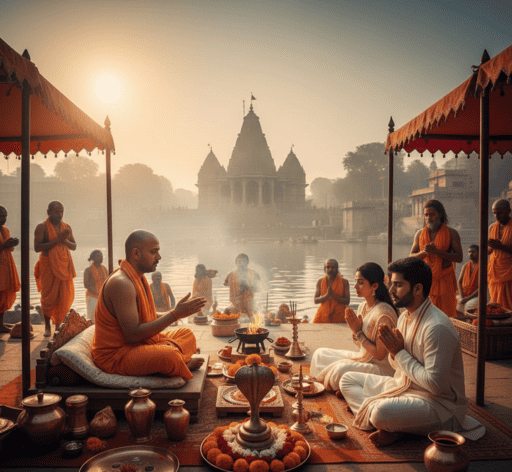
In Vedic astrology, Kaal Sarp Dosh occurs when all seven major planets in a person’s birth chart—Sun, Moon, Mars, Mercury, Jupiter, Venus, and Saturn—are positioned between Rahu and Ketu.
Rahu and Ketu are not physical planets. They are known as shadow planets that represent karmic influences, illusion, sudden change, and past-life effects.
Role of Rahu
Rahu symbolizes:
- ambition
- obsession
- illusion
- confusion
- material desires
It often creates an intense urge for success but may also lead to instability and uncertainty.
Role of Ketu
Ketu represents:
- spirituality
- detachment
- past-life karma
- isolation
- inner transformation
When Rahu and Ketu dominate the horoscope, they can restrict the positive influence of other planets, often causing repeated struggles and unexpected life challenges.
Types of Kaal Sarp Dosh
Not all Kaal Sarp Doshas are the same. According to Vedic astrology, there are 12 types of Kaal Sarp Dosh, depending on the positions of Rahu and Ketu in different houses of the birth chart.
Some of the commonly known types include:
- Anant Kaal Sarp Dosh
- Kulik Kaal Sarp Dosh
- Vasuki Kaal Sarp Dosh
- Shankhpal Kaal Sarp Dosh
- Padma Kaal Sarp Dosh
- Mahapadma Kaal Sarp Dosh
- Takshak Kaal Sarp Dosh
- Karkotak Kaal Sarp Dosh
- Shankhachood Kaal Sarp Dosh
- Ghatak Kaal Sarp Dosh
- Vishdhar Kaal Sarp Dosh
- Sheshnag Kaal Sarp Dosh
Each type affects different areas of life, and the intensity may vary depending on the planetary alignment in the horoscope.
Symptoms of Kaal Sarp Dosh
People experiencing the effects of Kaal Sarp Dosh often notice recurring problems in different aspects of life.
Career Problems
- Difficulty finding stable jobs
- Frequent job loss
- Delayed promotions
- Workplace conflicts and politics
Marriage and Relationship Issues
- Delayed marriage
- Broken engagements
- Relationship misunderstandings
- Emotional distance in married life
Financial Struggles
Even when income is stable, savings may not grow.
- unexpected expenses
- business losses
- financial instability
- increasing debts
Mental and Emotional Stress
Many people report experiencing:
- anxiety without clear reason
- constant fear about the future
- loss of confidence
- disturbed sleep patterns
Spiritual Significance of Ujjain for Kaal Sarp Dosh Puja in Ujjain
Ujjain holds a special place in Hindu astrology and spirituality.
It is one of the Sapta Puri, the seven most sacred cities believed to grant spiritual liberation.
Historically, Ujjain was also considered an important center for astronomical and astrological calculations, making it deeply connected with planetary movements and cosmic timing.
Mahakaleshwar Jyotirlinga and Its Importance
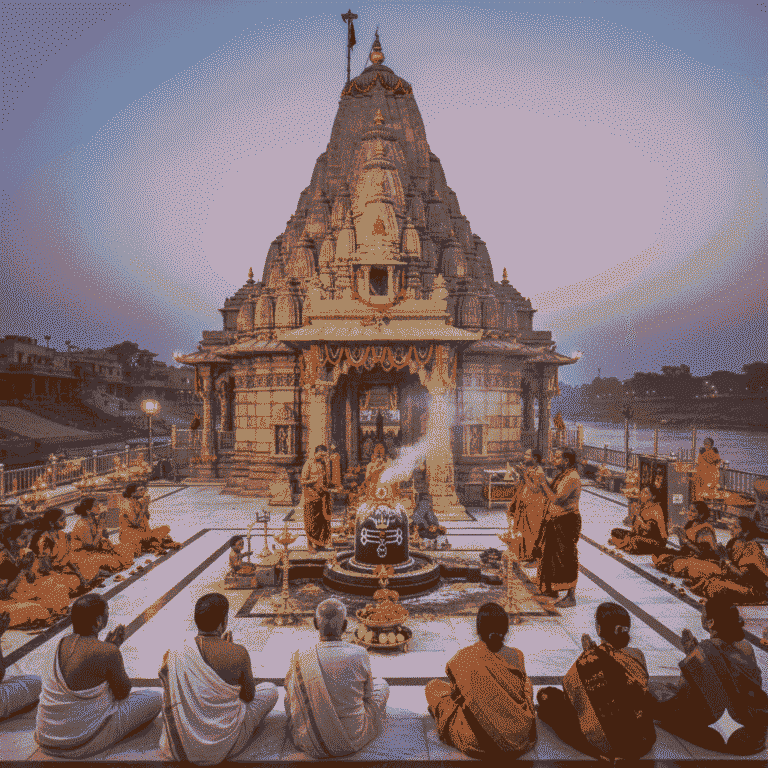
At the center of Ujjain stands the Mahakaleshwar Jyotirlinga, one of the twelve sacred Jyotirlingas of Lord Shiva.
The temple is unique because the Shivling here faces south, which is known as Dakshinamukhi.
Lord Mahakal is believed to be the controller of time (Kaal) and the remover of karmic obstacles.
Since Kaal Sarp Dosh is associated with karmic patterns and time cycles, performing the puja in the divine presence of Lord Mahakal is believed to amplify the spiritual benefits.
Role of the Shipra River in the Kaal Sarp Dosh Puja in Ujjain
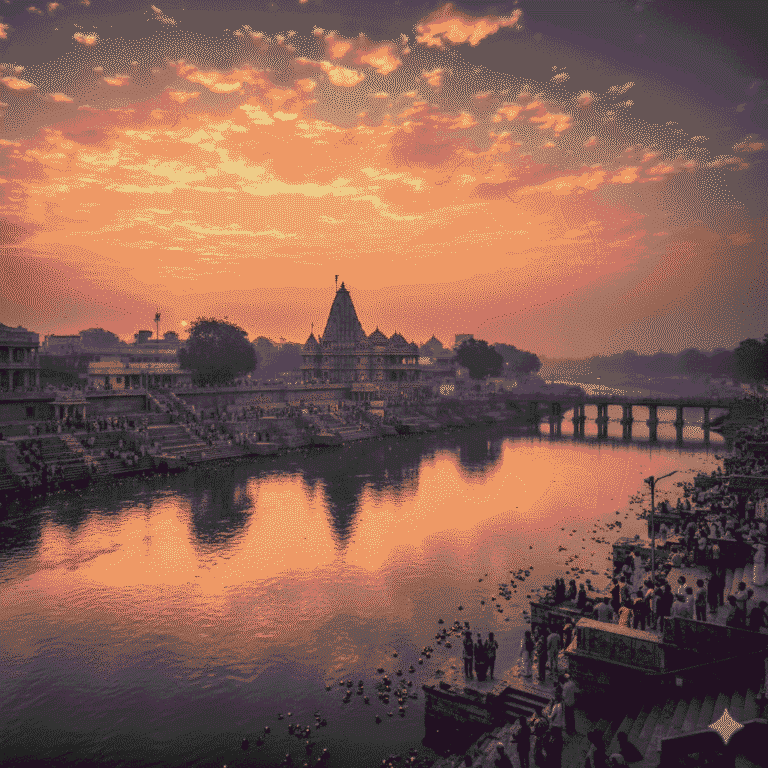
The sacred Shipra River flows through Ujjain and plays an important role in many spiritual rituals.
Before performing the Kaal Sarp Dosh Puja in ujjain, devotees often take a ritual bath in the Shipra River or symbolically wash their hands and feet.
This act represents purification and the release of negative energies, preparing the devotee spiritually for the main ritual.
Step-by-Step Process of Kaal Sarp Dosh Puja in Ujjain
The Kaal Sarp Dosh Puja in Ujjain follows a detailed Vedic procedure guided by experienced pandits.
Step 1 – Sankalp
The ritual in kaal sarp dosh puja in ujjain begins with Sankalp, where the devotee states:
- name
- gotra
- birth details
- purpose of performing the puja
This step spiritually connects the ritual with the person’s karmic energy.
Step 2 – Ganesh Puja
Lord Ganesha is worshipped first to remove obstacles and ensure that the ritual proceeds smoothly.
Step 3 – Navagraha Puja
The nine planetary deities are worshipped, with special focus on Rahu and Ketu, whose energies are responsible for the dosh.
Step 4 – Rahu Ketu Mantra Jaap
Sacred Vedic mantras are chanted repeatedly to pacify Rahu and Ketu and reduce their negative influence.
Step 5 – Naag Naagin Pratima Puja
Snake idols made of silver or copper are worshipped as symbolic representations of Rahu and Ketu.
This ritual signifies acknowledgement of past karmic influences and a request for spiritual forgiveness.
Step 6 – Havan
A sacred fire ritual is performed where offerings are made into the fire while chanting Vedic mantras.
This process is believed to burn negative karmic energy.
Step 7 – Naag Pratima Visarjan
The final step involves immersing the snake idols at a sacred location, symbolizing the release of karmic burdens and the completion of the ritual.
Spiritual Benefits of Kaal Sarp Dosh Puja
People who perform the kaal sarp dosh puja in ujjain often report positive changes in different areas of life, such as:
- improved career opportunities
- better financial stability
- harmony in relationships
- mental peace and emotional balance
- spiritual clarity
Many devotees say that after completing the puja they feel lighter, more positive, and ready to move forward without the burdens of past obstacles.